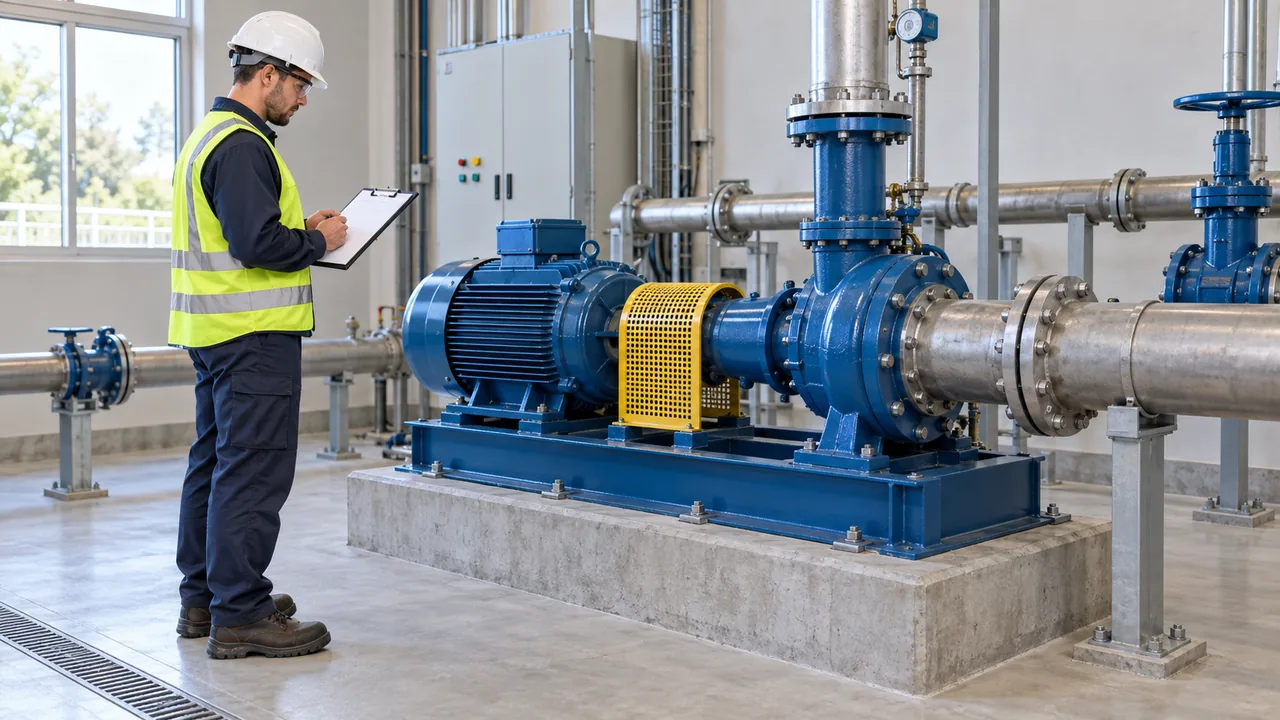
Industrial pump installation depends on the model, configuration and system. This checklist is for project owners, procurement teams and supervisors, with a focus on dry-installed centrifugal pump sets. It is not a do-it-yourself assembly, wiring or start-up procedure. Installation and testing must be performed by appropriately qualified personnel using the actual model’s instructions.
Confirm the model and site first, then verify the foundation, piping, alignment, electrical readiness and test records before handover.
Safety first: isolate and lock out energy sources, release pressure and assess risks before work. Never remove rotating-part guards or work on live circuits. Submersible, borehole, fire-protection and hazardous-area installations need their own procedures and are outside this checklist.
1. Confirm drawings, manuals and responsibilities
Confirm the pump, motor, design duty and accessories before bringing the set to site. Check deliveries against purchase documents and inspect for transport damage. Ensure installers have the current instructions for the actual equipment.
Assign responsibility for mechanical work, electrical work, inspection and testing. Prepare lifting and access plans, working areas and any outage requirements. If the site differs from the design, obtain approval from the responsible designer before modifying the arrangement.
- Approved layout and piping drawings.
- Pump, motor and accessory installation and maintenance manuals.
- Electrical data and protective-device schedule.
- Acceptance criteria and test-record forms.
2. Check the foundation and maintenance space
The foundation must suit the set’s weight and specified conditions, avoid distortion and allow service access. Verify levels, anchoring points and foundation condition against the design and manufacturer requirements.
Do not apply a universal foundation dimension, grout thickness or bolt torque to every model. The responsible team should verify the actual set’s requirements, drainage and environmental protection.
3. Avoid using piping to force the pump into position
Have the team check suitable pipe supports and connections that do not pull the pump into alignment with the pipework. Check internal pipe cleanliness and access to valves and instruments.
Assess suction water levels and losses with the system design. Do not resize piping or add accessories solely from the flange size. Check valve type and location against approved drawings; the start-up valve sequence must come from the model-specific instructions.
4. Verify alignment and electrical readiness
Sets with separate pump and motor shafts connected by a coupling require alignment checks after installation, even when factory-aligned. Transport, foundation mounting and pipe connections can change alignment. Use manufacturer tolerances and measurements, not visual judgement.
Qualified personnel should verify supply compatibility, grounding, protection and control signals against the approved design. Do not improvise wiring changes or rotation checks. Restore all rotating-part guards before permitting operation.
5. Test, record and hand over
Non-self-priming centrifugal pumps need filling and venting according to their instructions before testing. Do not run dry unless the design and manufacturer explicitly permit the specific condition. Check lubrication, seal systems and protective devices as well.
During testing, record flow, pressure, electrical readings and operating observations according to the acceptance plan. If leakage, noise, vibration or temperature is abnormal, stop using the approved procedure and investigate before restarting. Do not continue in the hope that the problem will disappear.
Hand over manuals, as-built drawings, test reports and approved settings, together with maintenance arrangements and named contacts. These records give the plant team a usable reference after the project ends.
- Foundation, piping, alignment and electrical inspection records.
- Test results with measurement conditions.
- Manuals, spare-parts information and maintenance plan.
- As-built drawings and responsible contacts.
Manufacturer reference: KSB — priming ↗
Review the system information needed for factory pump selection →
Frequently asked questions
Must a new pump set be aligned again?
For separate shafts connected by a coupling, check alignment after installation and piping as instructed, even if factory-aligned. Close-coupled sets differ: use their own inspection method.
Can this article replace the installation manual?
No. It is a planning and inspection framework. Technical values, start-up sequences and safety requirements must follow the actual equipment instructions and responsible personnel.
Summary and next steps
A sound installation needs clear drawings, documented checks and traceable handover information. Share the proposed model, drawings and site photos with Treesing to discuss equipment scope and coordination with the installer.
Discuss your drawings and installation requirements ↗References and scope
Introductory guidance, not a substitute for system design or model-specific instructions. Confirm details with the manufacturer and responsible project personnel.